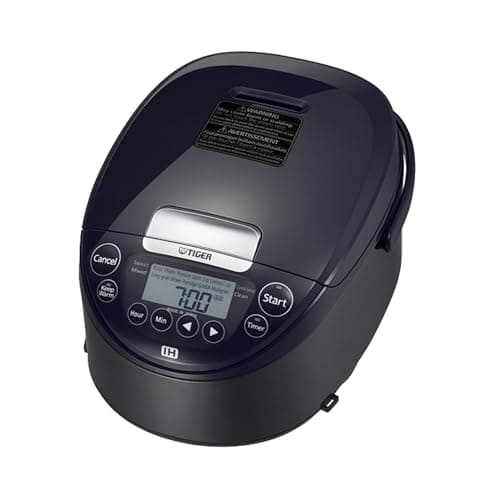
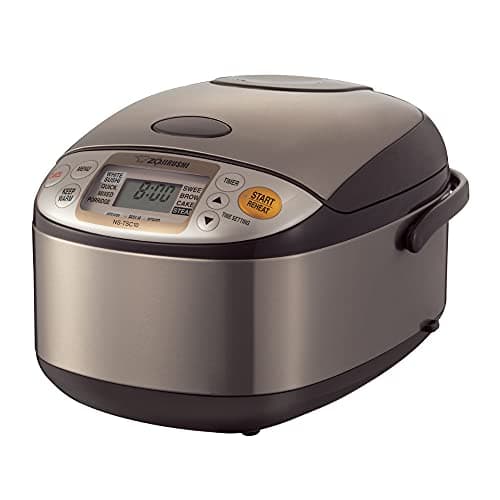
Our Verdict
Tiger Tiger JPW-H10U Wins
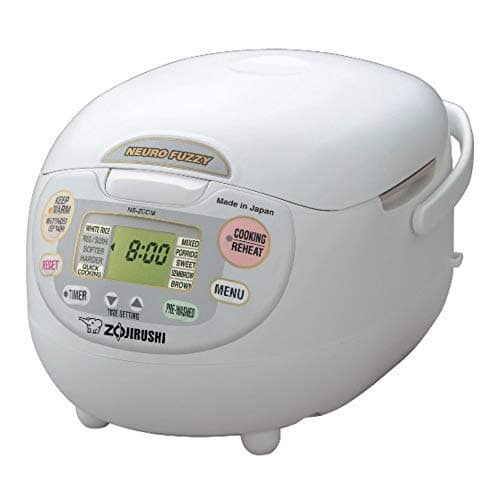
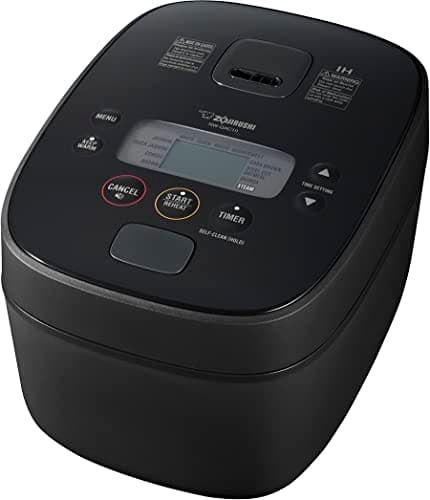
Its Induction Heating (IH) ensures superior, even cooking compared to Micom, a key priority spec. Choose Zojirushi NS-TSC10 for its fuzzy logic, two delay timers, and dedicated steam program for versatile cooking options.
Spec Comparison
10 specs compared
| Specification |  | 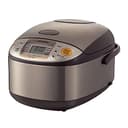 |
|---|---|---|
| Price | $295 | $210 |
| Rating | 4.4(638) | 4.4(65) |
| Heating Technology | Induction Heating (IH) | Micom |
| Capacity Cups | 5.5 | 5.5 |
| Delay Timer | Yes | Yes |
| Display Type | LCD | — |
| Model Number | JPW-H10U | NS-TSC10 |
| Keep Warm Hours | 24 hrs | — |
| Induction Heating | Yes | — |
| Fuzzy Logic | — | Yes |
| Cooking Programs | — | Steam |
| Dimensions | — | 10.13" × 8.5" × 14" |
Swipe horizontally to see all columns
Pros & Cons
Quick overview of strengths and weaknesses

Tiger JPW-H10U Induction
- Induction heating ensures even cooking of rice.
- Thick inner pot retains heat, reduces hot spots.
- 14 presets for specific rice types and dishes.
- 24-hour keep warm maintains rice serving temp.
- Higher upfront cost compared to standard cookers.
- 5.5-cup capacity limits use for larger families.

Zojirushi NS-TSC10 5-1/2-Cup
- Fuzzy logic adjusts cook cycle automatically.
- Cooks 5.5 cups (1.0L) of uncooked rice.
- Auto keep warm, extended warm, and reheat.
- Two programmable delay start timers.
- Large 14-inch depth requires substantial counter space.
- 5.5 cup capacity may be excessive for single users.
Frequently Asked Questions
Common questions about this comparison
What is the main difference in heating technology between these two rice cookers?
The Tiger JPW-H10U uses Induction Heating (IH) for precise temperature control and even cooking. The Zojirushi NS-TSC10 uses Micom (fuzzy logic), which intelligently adjusts cooking based on rice type. IH offers a more advanced and uniform heating method.
Which rice cooker is better for consistently achieving perfectly cooked rice?
The Tiger JPW-H10U, with its Induction Heating and thick inner pot, delivers more consistent and even heat distribution. This typically results in superior rice texture and quality, especially for a variety of rice types using its 14 presets.
What capacity do these rice cookers offer, and is it suitable for families?
Both the Tiger and Zojirushi models offer a 5.5-cup capacity. This size is generally ideal for small to medium-sized families, typically serving 2-5 people. For single users, it might be excessive; for very large families, it might be too small.
What are some other key features differentiating these models?
The Tiger boasts 14 menu presets and a 24-hour keep warm function. The Zojirushi has auto, extended, and reheat keep warm, plus two programmable delay start timers and a dedicated steam cooking program.
Related Comparisons
Similar products people compare

Explore Other Categories
Popular comparisons across the site
Ask AI
Get instant answers about specs
Get the Deets
Ask our AI assistant
Ask Deets anything!